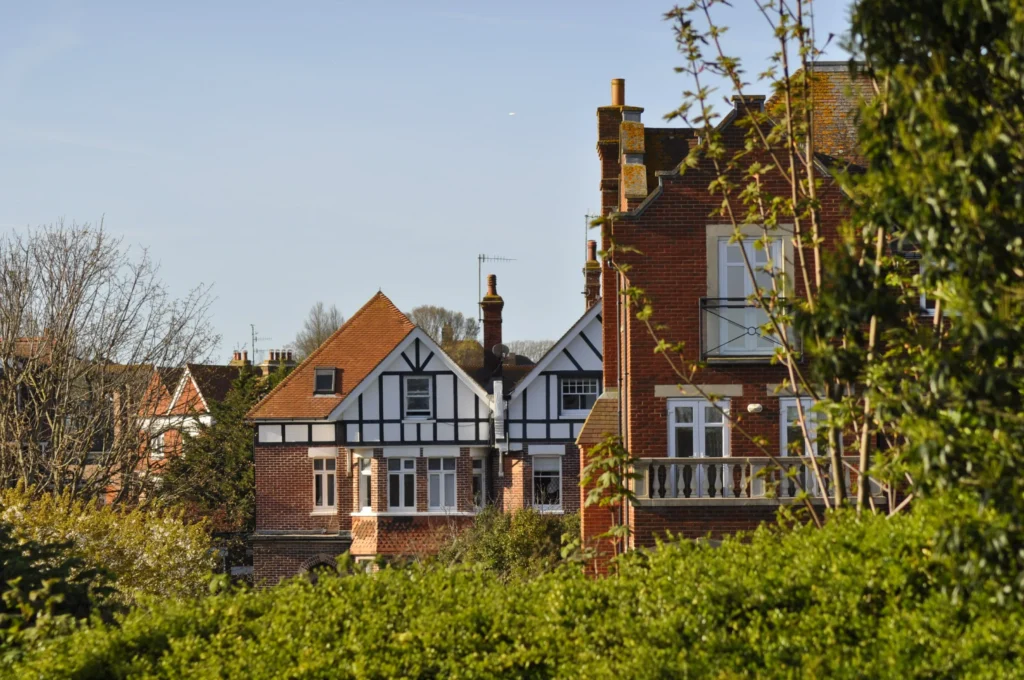
Inherited a Property in South London? Should You Sell, Rent or Renovate Before 2027?
Inheriting a property can leave you facing a decision you never expected to make.
Perhaps you’ve inherited a family home in Morden that needs updating. Maybe you now own a flat in Wimbledon but live elsewhere. Or you and your siblings have inherited a property in Mitcham and aren’t sure what to do next.
Should you sell, rent it out or renovate first?
Each option has potential advantages, but the right decision depends on more than the property’s estimated value.
You need to consider legal responsibilities, tax implications, ongoing costs, local property demand and your personal circumstances.
In this guide, Sandton Residential & Commercial explains how to compare your options and make a more informed decision before 2027.
What Should You Do First After Inheriting a Property?
Before deciding what to do with an inherited house or flat, establish who has the legal authority to deal with it and what responsibilities already exist.
Your first seven steps
- Check the legal ownership. Establish whether the property belonged solely to the deceased or was jointly owned.
- Understand the probate position. Confirm whether a grant of probate or letters of administration are required.
- Review outstanding liabilities. Check for mortgages, service charges, council tax, utility bills and other commitments.
- Secure and insure the property. Tell the insurer if the property is unoccupied and check any conditions of cover.
- Inspect the property’s condition. Identify urgent repairs, damp, leaks, security problems and safety concerns.
- Speak to other beneficiaries. Agree how decisions will be made if more than one person has an interest in the property.
- Understand its market value. Obtain an appropriate valuation before deciding whether to sell, let or improve it.
A property’s value for probate or tax purposes may require a different form of valuation from a marketing appraisal. Ask your solicitor or tax adviser what evidence is needed.
Inherited a property in Morden, Wimbledon or Mitcham?
Before spending money on renovations or making a decision to sell, find out what your property could realistically achieve in the local market.
Request a Property Valuation from Sandton
Option 1: Selling an Inherited Property

Selling is often worth considering when you want to release capital, simplify ownership or avoid the responsibilities of maintaining a second property.
It can be particularly practical when several family members have inherited the same home.
When selling may be the better option
Selling could suit your circumstances if:
• You need access to the property’s value.
• The property is far from where you live.
• Several beneficiaries want to divide the proceeds.
• You do not want to become a landlord.
• The house requires maintenance you cannot comfortably manage.
• Your financial plans are better served by selling than retaining the property.
However, selling quickly is not always the same as selling well.
An asking price that is too ambitious may reduce early interest, while a price that is too low could mean missing out on potential value.
How much could your inherited property sell for?
A realistic valuation considers factors such as location, condition, accommodation, outdoor space, transport connections and comparable properties.
For example, a family home in Morden near transport links may appeal to a different audience from a Wimbledon flat or a property requiring refurbishment in Mitcham.
Understanding the likely buyer audience helps inform both pricing and presentation.
Sandton’s guide to the residential selling process explains the stages involved in bringing a property to market.
Should you sell before Christmas or wait until 2027?
There is no universal rule that properties sell for more before or after Christmas.
Your decision should depend on whether the property is ready, your legal position, buyer demand for that type of home and your personal timetable.
If probate is ongoing, you may be able to prepare for a sale while legal matters are being resolved, but the ability to exchange or complete will depend on the circumstances.
A local property professional and solicitor can help you plan a realistic timeline.
Option 2: Renting Out an Inherited Property
If you do not need to sell immediately, renting may provide regular income while allowing you to retain ownership.
But rental income is not the same as rental profit.
Before deciding to let an inherited property, calculate the costs of becoming a landlord.
What expenses should you consider?
Potential expenses include:
• Letting and management fees.
• Property maintenance and repairs.
• Buildings and landlord insurance.
• Safety inspections and compliance.
• Service charges and ground rent, where applicable.
• Mortgage payments, if relevant.
• Periods when the property is empty.
• Tax on rental profits, where applicable.
You should also consider how much time and responsibility you are willing to take on.
Example: What could an inherited property earn in rent?
Imagine an inherited home with an estimated market value of £400,000 and a potential monthly rent of £1,750.
| Calculation | Illustrative amount |
|---|---|
| Monthly rental income | £1,750 |
| Annual gross rental income | £21,000 |
| Property market value | £400,000 |
| Gross rental yield | 5.25% |
Gross rental yield = Annual rental income ÷ Property value × 100
This example is hypothetical, not an estimate of current rental prices in Morden or Wimbledon.
The 5.25% figure does not account for management fees, maintenance, vacancies, insurance, finance costs or tax.
A proper rental appraisal should help you understand the likely income and associated expenses for your particular property.
Request a Rental Valuation from Sandton
Understand the Renters’ Rights Act before becoming a landlord
Important changes to private renting in England came into effect on 1 May 2026 under the Renters’ Rights Act.
Among other changes, the legislation introduced assured periodic tenancies, ended the Section 21 no-fault eviction process for applicable private tenancies and changed rules concerning rent increases and rental advertising.
For someone becoming a landlord for the first time, understanding the current requirements is essential.
You should also check applicable gas and electrical safety obligations, deposit protection, energy-performance requirements and any local licensing rules.
Read the official Renters’ Rights Act guidance for landlords before letting the property.
What if you don’t want to manage tenants yourself?
Owning an inherited rental property can be particularly demanding when you live outside London.
Professional management may help with marketing, tenant administration, maintenance coordination and ongoing property oversight. Sandton offers landlord services and property management support for property owners who want assistance managing their investment.
Option 3: Renovating an Inherited Property
Renovating may be worthwhile if improvements could make the home easier to sell or rent.
However, it is important to distinguish between work that is necessary and work that is simply desirable.
Which improvements should you prioritise?
Start with issues that could affect safety, condition or marketability:
• Water leaks, damp and structural concerns.
• Electrical or heating problems.
• Broken fixtures and damaged flooring.
• Poor ventilation.
• Neglected gardens and exterior areas.
• Tired decoration that affects first impressions.
For some properties, straightforward repairs and fresh decoration may be enough.
For others, more substantial work could be justified.
Does renovating always increase your profit?
No. Spending £25,000 on a property does not guarantee a £25,000 increase in its value.
Consider this hypothetical example:
Item Amount
Estimated value before renovation £400,000
Renovation budget £25,000
Estimated value after renovation £435,000
Potential increase in value £35,000
Difference before other costs £10,000
The £10,000 is not a guaranteed profit.
Unexpected building costs, holding costs, selling fees, financing and tax could reduce or eliminate the benefit.
You should also consider the time and disruption involved.
Before starting major renovations, obtain appropriate contractor quotations and compare the likely sale or rental value before and after the work.
When might selling as-is be sensible?

Selling without major renovations may be worth considering when:
• The property needs extensive work.
• You cannot fund or supervise a refurbishment.
• You want to avoid delays.
• Buyers in the area may prefer to undertake their own improvements.
• The expected uplift does not justify the cost and risk.
The best decision comes from comparing realistic outcomes, not assuming a newly renovated property will always deliver a better return.
Sell, Rent or Renovate: How Do You Decide?
Start by identifying your main priority.
| Your situation | Option worth exploring first |
|---|---|
| You want to release capital and simplify ownership | Sell |
| You want potential long-term income | Rent |
| The property needs repairs that affect its marketability | Assess renovation |
| You live far from the property | Sell or professionally managed letting |
| Several beneficiaries disagree | Obtain valuations and seek legal advice |
| You’re unsure what the property could achieve | Compare sales and rental appraisals |
These are starting points rather than personal financial recommendations.
Five questions to help you choose
1. Do I need the money now?
If the capital is needed for another purpose, selling may be more practical than retaining the property.
2. Can I afford ongoing costs?
Even an empty property can generate expenses. Renting introduces further responsibilities and possible unexpected costs.
3. How much work does the property need?
Get an honest assessment of its condition before committing to improvements.
4. What does the local market support?
Compare realistic selling prices and rental income rather than relying on national averages.
5. What will this decision mean in five years?
Think about whether you want a long-term investment, a simpler financial position or freedom from managing a property.
Comparing the Financial Outcomes: A Worked Example
Imagine inheriting a house with an estimated market value of £400,000.
You have three possible routes:
| Sell now | Rent out | Renovate, then sell | |
|---|---|---|---|
| Starting property value | £400,000 | £400,000 | £400,000 |
| Renovation budget | £0 | £0 | £25,000 |
| Illustrative sale price | £400,000 | — | £435,000 |
| Illustrative monthly rent | — | £1,750 | — |
| Illustrative gross annual rent | — | £21,000 | — |
| Main consideration | Sale costs and tax | Ongoing costs and responsibility | risk and time |
All figures are hypothetical and are not Sandton market appraisals.
To compare the options properly, you would need:
• Estimated net sale proceeds after relevant costs and taxes.
• Estimated net annual rental income.
• Renovation quotations and a realistic completion timeline.
• Potential property value after improvements.
• Advice on your individual legal and tax position.
This is why obtaining both a sales valuation and rental appraisal can be useful before committing to a particular route.
Not sure whether selling or renting would work better?
Contact Sandton to discuss your property options.
What Taxes Apply to an Inherited Property in the UK?
Tax is one of the most important factors to consider when deciding what to do with an inherited home.
The treatment depends on the estate, the property’s ownership and what happens after inheritance.
Inheritance Tax
You do not usually pay tax simply because you receive an inheritance.
Inheritance Tax, where due, is normally dealt with by the estate’s personal representative, although exceptions exist.
Capital Gains Tax
Capital Gains Tax may become relevant if an inherited property increases in value and is subsequently sold.
The applicable calculation depends on factors including the property’s value at death, ownership arrangements, allowable costs and any reliefs.
Income Tax on rental income
If you rent out an inherited property, taxable rental profits may need to be declared.
The position can differ depending on whether the property remains part of the estate or has been transferred to a beneficiary.
Important: Sandton can advise on property-market considerations, but you should consult a qualified solicitor and tax adviser for individual probate and taxation matters.
Why Local Knowledge Matters in Morden, Wimbledon and Mitcham
Property values and rental demand vary across South West London.
Even homes that look similar on paper may appeal to different audiences depending on their location, layout and condition.
Inherited property in Morden
Morden offers access to the Northern line, local amenities and green spaces, including Morden Hall Park.
For inherited houses and flats in Morden, factors such as proximity to transport, property size, parking and condition can influence buyer and tenant interest.
Inherited property in Wimbledon
Wimbledon includes a range of property types and neighbourhoods, from flats suited to commuters to larger family homes.
Understanding the property’s precise location and target audience is important when assessing selling and rental options.
Inherited property in Mitcham
In Mitcham, buyers and tenants may place different priorities on affordability, transport connections, accommodation and access to local services.
A property requiring renovation may also attract a different audience from one that is ready to occupy.
Why a local valuation is more useful than a general estimate
Online estimates can provide an initial indication of value, but they may not fully account for condition, unusual layouts, recent improvements or specific local demand.
For an inherited property in Merton or surrounding South London areas, an informed local appraisal can help establish realistic expectations.
Professional Property Guidance from Beenish Hanif MRICS
Deciding what to do with an inherited property is not always straightforward, particularly when the home has emotional significance or several family members are involved.
At Sandton Residential & Commercial, clients can benefit from professional property knowledge alongside an understanding of the local market.
Beenish Hanif MRICS, Director of Sandton and a Chartered Surveyor, brings a professional perspective to property decisions.
MRICS signifies membership of the Royal Institution of Chartered Surveyors, a recognised professional body for the property and built-environment sectors.
Sandton is a RICS-regulated firm, and its approach emphasises transparency, professional standards and long-term client relationships.
For inherited-property owners, the value of professional guidance lies in understanding the options before making a commitment.
Rather than assuming every property should be sold or every refurbishment will increase its value, the starting point should be the property’s circumstances and the owner’s objectives.
Whether you are considering selling, exploring potential rental income or assessing whether improvements are worthwhile, Sandton can help you evaluate the property-market aspects of your decision.
Frequently Asked Questions About Inherited Property
Can I sell an inherited house before probate is complete?
You may be able to begin preparing or marketing a property before probate is complete, depending on the circumstances. However, the legal authority needed to complete a sale varies according to ownership and the estate. Seek advice from a probate solicitor.
Is it better to sell or rent an inherited property?
It depends on your financial goals, expected sale value, potential rental income, property condition, tax position and willingness to manage a rental investment. Comparing both options with realistic figures is a sensible first step.
Should I renovate an inherited house before selling?
Not necessarily. Minor improvements may help presentation, but substantial renovations should be evaluated against their likely cost, duration and potential increase in value.
Do I pay Capital Gains Tax when selling an inherited property?
Capital Gains Tax may apply to gains arising after the relevant inheritance valuation, subject to the circumstances and available reliefs. The estate and individual beneficiaries may have different reporting responsibilities.
What if I inherit a property with my siblings?
You will need to establish the ownership and agree how decisions should be made. If beneficiaries have different preferences, obtaining independent legal advice and reliable property valuations can help clarify the available options.
Can I rent out an inherited property if I live outside London?
Potentially, provided you have the legal authority to let it and comply with applicable requirements. A professional letting or management service may help with day-to-day responsibilities.
How do I find out what my inherited house is worth in Morden?
A local property appraisal can help you understand its potential selling price based on condition, location and comparable market evidence.
For estate or tax purposes, confirm with your solicitor or tax adviser whether a formal valuation is required.
Your Inherited Property Deserves an Informed Decision
An inherited property may represent family memories, financial opportunities and responsibilities you did not anticipate.
There is no single answer that suits everyone.
Selling may provide a simpler way forward. Renting could offer long-term income. Renovating might improve marketability, but only where the expected benefits justify the investment.
The most important step is understanding the property’s potential before making a commitment.
If you have inherited a house or flat in Morden, Wimbledon, Mitcham or the wider South London area, Sandton Residential & Commercial can help you explore your sales and letting options.
Speak to Sandton About Your Inherited Property
Considering selling? Request a sales valuation.
Thinking about renting? Request a rental valuation.
Not sure which option is right? Contact the Sandton team to discuss your circumstances.
Sandton Residential & Commercial
28 Crown Lane, Morden, SM4 5BL
Telephone: 020 3771 9141
Email: contactus@sandton.co.uk
Website: www.sandton.co.uk
Disclaimer: This article is general information and does not constitute legal, financial or tax advice. Property values, rental returns and renovation outcomes vary. Consult appropriately qualified professionals before making decisions about an inherited estate.